21 November 2026 · Translating…
Are We Obsessed With Roadmaps?
At what point does managing the roadmap become more work than delivering the actual work?
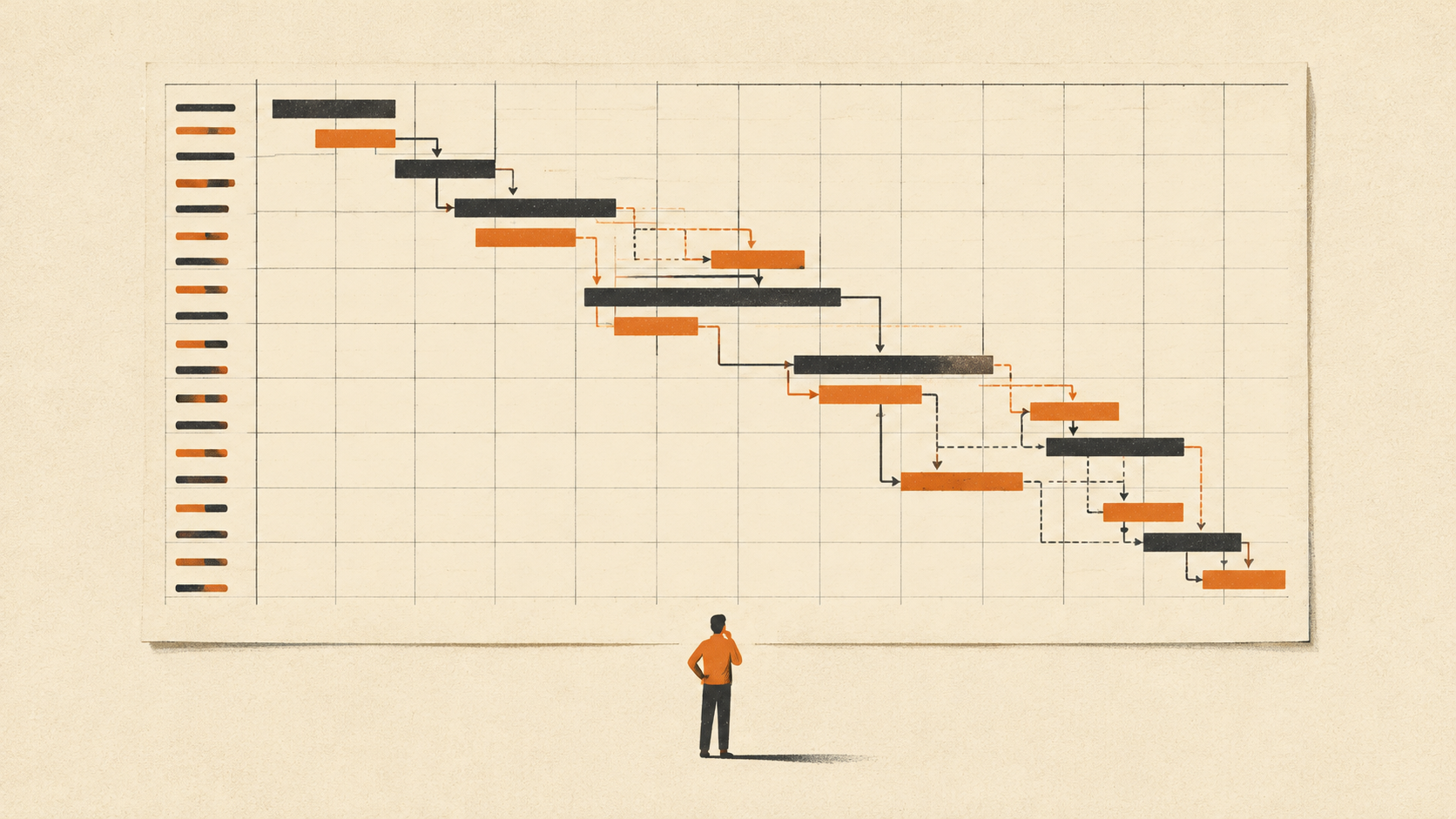
Lately, I’ve been thinking about how much importance we give to roadmaps in organisations.
In Product, Marketing, Sales, Technology and almost every other area, we are expected to have one. We need to show what we are doing, when we are doing it, who is involved and what we expect to achieve.
And I understand why. Planning is important. Alignment is important. Teams need direction.
But are we becoming too obsessed with roadmaps?
Sometimes I wonder if we really need them to plan better, or if having a roadmap has simply become a way of showing that we are organised, productive and adding value.
A roadmap gives us something to present to management. It helps justify budgets, resources and priorities. It gives everyone a sense of control over what is coming next.
But there is a difference between having a plan and being able to execute it.
Imagine planning a product launch for March because Technology indicated that development would be completed in February.
Was February a confirmed commitment or just an estimate?
If it was an estimate, why did the product roadmap present March as a confirmed launch?
This happens quite often. One team’s estimate becomes another team’s commitment. Marketing starts preparing campaigns, Sales plans commercial activities and other departments organise their work around a date that was never really guaranteed.
Then something changes.
Technology has other priorities. An approval takes longer than expected. Another department has an urgent request. Resources become unavailable.
And suddenly, your roadmap needs to change.
But changing a roadmap is not just about moving dates. It means going back to people, renegotiating priorities, reorganising work and sometimes affecting other teams’ plans.
You adjust, realign and communicate. Then something else changes, and you do it all over again.
From the outside, it can look like poor planning or a team that doesn’t know what it wants. But sometimes the problem is not the team’s ability to plan. It is the organisation’s ability to work together and deliver what was agreed.
We expect teams to be accountable for their roadmaps, even when they don’t control all the things they depend on.
And there is another side to this.
Sometimes, getting things done becomes less about following the roadmap and more about knowing who to call, who to approach and how to get things moving.
You find yourself making calls, having informal conversations, lobbying internally and asking people to help move things forward. Things that seemed impossible through normal processes suddenly become possible after a few conversations.
I’m not saying that building relationships and influencing people is a bad thing. It is part of working in any organisation.
But when you constantly need to use personal influence just to get things done, something is not working as it should.
There is the organisation we see on paper, with its structures, processes, approvals and roadmaps. Then there is the organisation that actually gets things done through relationships, influence and informal conversations.
And sometimes, the second one works better than the first.
Meanwhile, we keep updating our roadmaps.
I also think our obsession with roadmaps has something to do with how we prove our value at work.
Managers need to show progress. Teams need to justify their resources. Departments need to defend their budgets. Everyone needs to demonstrate that they are contributing.
A roadmap full of initiatives, milestones and deliverables is a good way to show that we are busy.
But being busy is not the same as creating value.
We can launch features without solving real customer problems. We can run campaigns without generating more business. We can complete projects without making operations better.
Sometimes, the best thing a team can do is stop doing something.
But stopping an initiative or removing unnecessary work can be harder to explain than adding something new to the roadmap.
We seem to have created an environment where everyone needs to show what they are doing, even when we should be asking whether those things are actually worth doing.
So, should we be obsessed with roadmaps?
I don’t think so.
We should be focused on where we want to go, what we want to achieve and whether we are actually making progress.
Roadmaps should help us organise our work, align teams and manage dependencies. They should give us direction, but they should also leave room for things to change.
Of course, constantly changing priorities has a cost. It affects teams, creates frustration and makes it harder to deliver.
The answer is not simply to plan less or change more often. We also need organisations that manage dependencies better, make decisions faster and understand the impact of changing priorities.
And we need to rethink how we measure people’s contribution. Not just by how many initiatives they have on their roadmaps, but by the value they create, the problems they solve and even the unnecessary work they manage to eliminate.
I don’t think roadmaps are the problem.
The problem starts when maintaining the roadmap becomes more important than achieving what it was supposed to help us achieve.
Are we building roadmaps to help us navigate the future, or because we are uncomfortable admitting that we don’t know exactly what the future looks like?
Keep reading

15 November 2026
The Interface Is Changing. But Is Everyone Coming Along?
Why the future of digital products cannot be designed around the assumptions of the world’s most connected markets.
Read article
8 November 2026
Everyone Can Grow Tomatoes. Everyone Can Build Apps. Who Can Sell Them?
Why distribution, not production, may become the biggest competitive advantage in the age of AI.
Read article
1 November 2026
When a Product Looks Successful but the Business Isn’t Winning
A product can look successful inside its own ecosystem while failing to deliver the reason the business invested in it.
Read article
Benjamim Paulino
End-to-end product strategist · Maputo, Mozambique